March 4, 2021
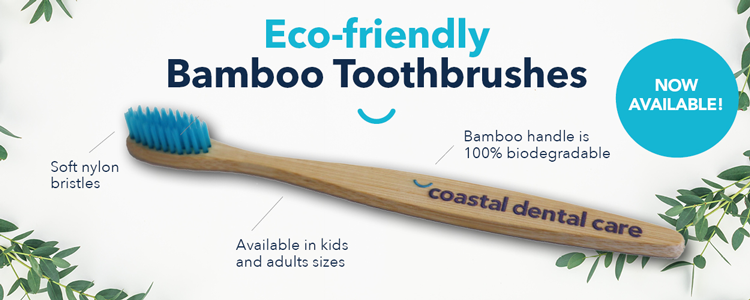
Benefits of Bamboo Toothbrushes are numerous, making them an excellent choice for eco-conscious individuals. At Coastal Dental Care, we now offer bamboo toothbrushes that are 100% biodegradable and eco-friendly.
Once you’ve finished using it, you can dispose of the toothbrush in your garden or compost bin, where it will naturally break down over time!
Benefits of bamboo toothbrushes
Like a plastic toothbrush, ones made from bamboo can also help you stay on top of your oral health. In fact, there are many benefits in switching to a bamboo toothbrush.
Our team has outlined several benefits of using a bamboo toothbrush which include:
Eco-friendly alternative
Bamboo toothbrushes are an eco-friendly alternative to a plastic toothbrush. They are fully biodegradable and can be used for other creative things around your house once you have finished using it.
However, you should remove the nylon bristles beforehand and place the bristles into your plastic recycle bin before getting creative.
Furthermore, if you choose to dispose of your toothbrush it may take 4 to 6 months to break down within a compost bin depending on what you put in it. You could also:
- Use it as fuel for your fireplace
- Dispose of it at your local commercial composter
- Place it in your garden or a pot plant
Reduce plastic waste
Due to the nature of the bamboo, a recent study supports that bamboo toothbrushes have the lowest impact on the environment when compared to a traditional plastic toothbrush and an electric toothbrush (1).
As the bamboo replaces the plastic toothbrush handle, this significantly reduces plastic waste when you eventually dispose of your toothbrush. Unlike plastic, which can take hundreds of years to decompose, bamboo is 100% biodegradable and breaks down naturally over time, making it an environmentally friendly choice.
Cleans your teeth
With soft, nylon bristles, our bamboo toothbrushes can still provide you with the oral care your teeth need. Just like a plastic toothbrush, it will still provide you with the same benefits but is an eco-friendlier option. The gentle bristles are designed to effectively clean your teeth while being kind to your gums. Regular use helps in preventing plaque buildup and cavities.
From a dentist’s perspective, we recommend you continue to brush your teeth twice a day and floss once a day to maintain good oral hygiene and keep your smile healthy.
Sustainable
Bamboo is one of the fastest-growing plants, making the supply of bamboo toothbrushes a more efficient and sustainable process. It’s renewable, and unlike plastic, bamboo production produces far less pollution. The rapid growth of bamboo also means that it can be replanted easily, ensuring a continuous supply.
Additionally, bamboo typically requires no fertilisers or pesticides to grow, which means fewer harmful chemicals are used in the production process, benefiting the environment.
Safe and gentle nylon bristles
Our bamboo toothbrushes use soft nylon bristles, which help to provide a gentle brushing experience. This results in less impact on your gums and enamel, allowing for a safer brushing routine. The bristles are safe for all ages and can be easily removed when it’s time to dispose of your brush.
We offer a variety of colours and sizes for both kids and adults, making it easier to find one that suits your needs. The colours available include:
The colours you can choose from include:
- Natural
- Blue
- Rainbow (kids only)
With eco-friendly materials and a focus on oral care, our bamboo toothbrushes make the perfect sustainable choice for you and your family.
Bamboo toothbrushes Gold Coast
We now have Bamboo toothbrushes available at our Coastal Dental Care practices. If you are looking for a dentist or a bamboo toothbrush on the Gold Coast, contact one of our friendly practices today!
Alternatively, you can book an appointment online 24/7.
References
- Lyne, A., Ashley, P., Saget, S. et al.Combining evidence-based healthcare with environmental sustainability: using the toothbrush as a model. Br Dent J 229, 303–309 (2020). Available from: https://doi.org/10.1038/s41415-020-1981-0

